



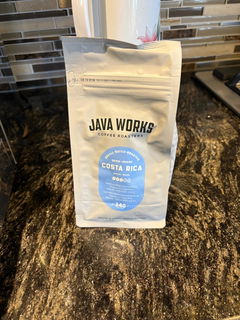


I was expecting light to medium beans. They seem more like above medium.
Since switching to decafe coffee I found this blend smooth and tasty. Hard to believe it is decafe. Very good.


INDE
Préparé sur la côte de Malabar pendant la saison de la mousson. Ce haricot rare et inhabituel nécessite 12 à 16 semaines de préparation méticuleuse. Les producteurs cueillent les cafés et les déposent dans des hangars côtiers, où ils absorbent l'humidité de l'air venteux et grossissent.
Notes : Florale et douce, avec des tons épicés et terreux
Retrait disponible à Java Works Coffee (Mon-Fri | 8:30am - 4:00pm)
Habituellement prête en 24 heures

PRODUCER PROFILE
Varietal: ?
This offering is not traceable to a single variety, which is actually part of what makes Indian coffee interesting. The most commonly cultivated varieties in the region include Kent, Tafarikela, San Ramon, Catuai, Cauvery, and Typica, many of them developed through India's long history of proactive breeding. The country grows some of the most genetically diverse coffee in the world, a legacy of both colonial cultivation and a deep, ongoing commitment to developing resilient and flavourful plant stock.
Region: Karnataka
Karnataka produces 65% of India's coffee, centred around the Sahyadri Mountain Range, also known as the Western Ghats. The range runs along the southwest coast of India, intercepting the seasonal monsoon winds that carry heavy rainfall from the Arabian Sea. Average elevations sit around 1,200 metres, with peaks exceeding 2,000 metres, and the region receives between 120 and 160 inches of rain during monsoon season. That persistent moisture and lush forest cover create a temperate rainforest climate where coffee has thrived for centuries. It is, quite literally, where Indian coffee was born.
Process: Monsooning
The monsooning process has its roots in the age of sailing trade between India and Europe. Coffee shipped from the Malabar Coast spent months at sea, exposed to warm, humid monsoon air, and arrived in Europe transformed, lower in acidity, deeper in body, with a richness that became its own style of flavour. When faster shipping made that accidental transformation impossible, producers recreated it deliberately on land.
Today, harvested cherries are sun-dried, hulled, and then spread on large covered patios or in open warehouses where they absorb the ambient coastal moisture. Each week the coffee is re-bagged and restacked, repeating the cycle over six to seven weeks until the beans turn a distinctive golden yellow. The result is a coffee with tempered acidity, a full heavy body, and the chocolatey, earthy, spiced character that has made Monsoon Malabar a classic.
Harvest
November - January
Monsoon Process
1600 m.A.S.L